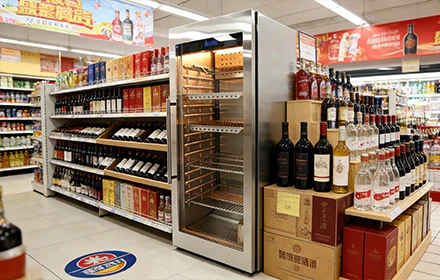
Why Does Anti-Fog Glass Still Condensate?
Many store owners assume that once a commercial freezer or cooler uses anti-fog glass, condensation problems disappear permanently. In reality, even heated glass doors can fog up when humidity, airflow, installation, or maintenance conditions fall outside the designed operating range.
If your glass door freezer fogging problem keeps returning, the issue is usually not the glass itself. It is typically a system imbalance involving:
- Store humidity
- Air conditioning airflow
- Heated glass performance
- Door sealing
- Product loading
- Refrigeration airflow design
- Defrost settings
This guide explains how to diagnose condensation step by step so your team can quickly identify the real cause instead of replacing parts blindly.
Understanding Why Condensation Happens
Condensation forms when warm humid air contacts a cold surface below the dew point temperature.
For glass door freezers and beverage coolers, this usually occurs when:
- Ambient humidity is too high
- Glass surface temperature drops too low
- Airflow across the glass is disrupted
- Heated glass systems stop functioning correctly
Even advanced anti-fog glass systems have operational limits.
Step 1 — Check Store Humidity First
High Humidity Is the #1 Cause
In supermarkets, convenience stores, and food retail environments, humidity levels often rise because of:
- Frequent door opening
- Poor HVAC balancing
- Fresh produce misting systems
- Rainy weather
- Kitchen steam nearby
- Inadequate dehumidification
When indoor relative humidity exceeds recommended levels, anti-fog systems struggle to keep up.
Recommended Indoor Conditions
| Environment | Recommended RH |
|---|---|
| Supermarket | 45–55% |
| Convenience Store | 40–55% |
| Hot/Humid Climate | Keep below 60% |
| Frozen Food Area | Preferably below 50% |
If the store humidity is above 65%, even properly functioning heated glass may begin to fog.
Signs Humidity Is the Real Problem
Look for these symptoms:
- Multiple refrigerated cases fog simultaneously
- Condensation worsens during rainy days
- Fogging appears mainly in mornings or peak traffic hours
- Water droplets form on nearby metal surfaces
- Entrance areas feel damp or warm
These are classic indicators of store humidity too high rather than equipment failure.
Step 2 — Verify Heated Glass Operation
Heated Glass Does Not Mean Unlimited Protection
Most commercial glass doors use:
- Heated tempered glass
- Low-E anti-fog coatings
- Conductive heating films
- Perimeter frame heaters
If the heating system partially fails, condensation quickly develops.
How to Check If Heated Glass Is Working
Touch Test
A functioning heated glass surface should feel slightly warm.
If the glass feels completely cold:
- Heater circuit may be off
- Power supply may be disconnected
- Controller may have failed
Common Heated Glass Failure Points
| Component | Possible Issue |
|---|---|
| Glass heater | Burned out |
| Wiring harness | Loose connection |
| Door frame heater | Partial failure |
| Controller | Incorrect voltage output |
| Defrost synchronization | Heater disabled unintentionally |
If only one door fogs while adjacent doors remain clear, the issue is often local heater failure.
Step 3 — Inspect Airflow Across the Glass
Airflow Problems Cause Uneven Glass Temperatures
Proper airflow across the inner glass surface helps stabilize temperature and reduce moisture accumulation.
When airflow becomes blocked:
- Cold spots develop
- Surface temperature drops
- Fogging intensifies
Common Airflow Issues
Overstocking Products
Products stacked too close to evaporator outlets can disrupt circulation.
Avoid:
- Blocking return air grilles
- Overfilling shelves
- Pushing products against rear panels
Fan Problems
Inspect for:
- Slow evaporator fans
- Failed fan motors
- Ice buildup around fans
- Dirt restricting airflow
Weak airflow often creates localized condensation patches instead of uniform fogging.
HVAC Air Blowing Directly on Glass
One overlooked issue is strong AC airflow hitting freezer doors directly.
This creates rapid surface temperature fluctuations and introduces humid air continuously.
Avoid:
- Ceiling vents aimed at freezer doors
- Entrance air streams crossing merchandisers
- Fans blowing directly onto glass
Proper airflow across glass should be balanced, not turbulent.
Step 4 — Examine Door Gaskets and Seals
Air Leakage Creates Constant Moisture Entry
Damaged gaskets allow warm humid air to infiltrate continuously.
This forces the anti-fog system to work harder and may overwhelm heated glass capacity.
Warning Signs of Gasket Problems
- Frost near door edges
- Water droplets around frame
- Doors not self-closing
- Visible gasket cracks
- Uneven door alignment
A simple dollar-bill test can help:
- Close the door on a paper bill
- Pull gently
- Weak resistance indicates poor sealing
Step 5 — Review Defrost Settings
Incorrect Defrost Cycles Can Increase Fogging
Defrost systems remove ice from evaporator coils, but improper timing can temporarily raise humidity inside the cabinet.
Problems occur when:
- Defrost duration is too long
- Defrost frequency is excessive
- Drain systems fail
- Fans restart too early
This moisture may condense on glass immediately after defrost cycles.
Typical Symptoms
| Symptom | Possible Cause |
|---|---|
| Fog appears after defrost | Fan timing issue |
| Temporary condensation | Excess moisture release |
| Water pooling | Drain blockage |
Modern controllers should synchronize:
- Defrost
- Fan restart
- Glass heating
- Compressor recovery
Step 6 — Check Ambient Heat Sources
External Heat Can Overload Glass Systems
Anti-fog performance decreases when external heat load rises dramatically.
Common causes:
- Direct sunlight
- Bakery ovens nearby
- Entrance exposure
- Hot lighting systems
This is especially important for glass door merchandisers near storefront windows.
Avoid Direct Sunlight
Direct sunlight refrigeration exposure creates:
- Higher surface humidity
- Increased compressor load
- Uneven glass temperatures
- Faster condensation formation
Relocating the cabinet sometimes solves recurring fogging completely.
Step 7 — Evaluate Store HVAC Coordination
Refrigeration and HVAC Must Work Together
Many condensation problems originate from poor HVAC coordination rather than refrigeration defects.
A well-designed supermarket environment balances:
- Temperature
- Relative humidity
- Air circulation
- Refrigeration heat rejection
HVAC Warning Signs
- Store feels humid overall
- Supply air temperature fluctuates heavily
- Ceiling diffusers create strong drafts
- Fresh air intake is excessive in humid climates
If multiple refrigerated cases struggle simultaneously, the HVAC system should be evaluated first.
Quick Condensation Diagnosis Checklist
Use This Practical Troubleshooting Sequence
1. Measure Store Humidity
Target:
- 45–55% RH preferred
2. Check Heated Glass Temperature
- Slight warmth expected
- Compare adjacent doors
3. Inspect Airflow
- Fans running normally
- No blocked vents
- No direct AC blowing
4. Examine Door Seals
- Gaskets intact
- Door alignment correct
5. Review Defrost Timing
- Observe fogging after defrost
6. Check External Heat Sources
- Sunlight
- HVAC vents
- Nearby ovens
Preventive Strategies for Long-Term Anti-Fog Performance
Best Practices
Maintain Stable Humidity
Install proper dehumidification in humid regions.
Clean Condenser Coils Regularly
Lower condensing temperatures help stabilize cabinet performance.
Avoid Overstocking
Protect internal airflow pathways.
Schedule Gasket Inspections
Replace worn seals early.
Verify Heater Circuits Quarterly
Prevent unnoticed heater failures.
Coordinate HVAC and Refrigeration Layout
Avoid aggressive airflow directly across freezer doors.
When Should You Replace the Glass?
Replacement is usually necessary only when:
- Heater elements are permanently damaged
- Glass seal integrity fails
- Moisture appears between glass panes
- Conductive coatings degrade
In many cases, recurring condensation is environmental rather than mechanical.
Final Thoughts
Anti-fog glass technology significantly improves product visibility, but it cannot overcome severe humidity imbalance, airflow disruption, or failed heating systems alone.
The most effective way to solve anti fog glass door condensation is through systematic diagnosis:
- Check humidity
- Verify heated glass
- Inspect airflow
- Examine seals
- Review HVAC interaction
For supermarkets and commercial refrigeration projects, condensation control is not just about the freezer — it is about the entire store environment.
Proper coordination between refrigeration equipment, airflow design, and HVAC systems delivers the best long-term visibility, energy efficiency, and customer experience.