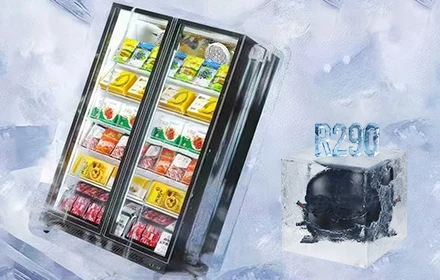
Commercial Refrigerator Not Cooling: A Practical Troubleshooting Guide
When a commercial refrigerator is not cooling properly, every minute matters—especially in supermarkets, convenience stores, and foodservice operations. Temperature rise leads directly to product loss, compliance risks, and revenue impact.
This guide gives you a fast diagnostic workflow: start with simple checks (that solve ~60–70% of cases), then escalate to technical faults.
Quick Troubleshooting Flow (Start Here)
Step-by-Step Decision Flow
Step 1 — Check Temperature Setting
- Is the thermostat set correctly?
- Recommended range:
- Chiller: 2°C to 5°C
- Freezer: -18°C or below
Incorrect settings are the fastest fix.
Step 2 — Inspect Airflow (Most Common Issue)
- Are vents blocked by products?
- Is the air curtain (for open multidecks) disrupted?
- Are shelves overpacked?
Poor airflow = uneven cooling or “too warm” zones.
Step 3 — Check Door Usage & Seals
- Doors left open frequently?
- Gasket damaged or leaking?
Warm air infiltration increases compressor load.
Step 4 — Examine Condenser Coils
- Are coils dusty or greasy?
- Is airflow around condenser restricted?
Dirty coils can reduce efficiency by 20–30%.
Step 5 — Verify Fans Are Running
- Evaporator fan inside cabinet working?
- Condenser fan spinning properly?
No airflow = no heat exchange.
Step 6 — Look for Frost or Ice Build-up
- Ice on evaporator coil?
- Blocked airflow due to frost?
Likely defrost system issue.
Step 7 — Compressor Check
- Is compressor running continuously?
- Any unusual noise or overheating?
If compressor fails → cooling stops entirely.
Step 8 — Call a Technician
If all above checks pass:
- Possible refrigerant leak
- Expansion valve failure
- Control board issue
These require professional service.
Common Causes (Ranked by Frequency)
1. Blocked Airflow (Top Cause)
Symptoms:
- Front items warm, back items cold
- Uneven temperature zones
Fix:
- Maintain airflow gaps (≥5–8 cm)
- Avoid stacking against vents
2. Dirty Condenser Coils
Symptoms:
- Gradual cooling decline
- Higher energy consumption
Fix:
- Clean every 1–3 months
- Use coil brush + vacuum
3. Faulty Evaporator Fan
Symptoms:
- No air circulation inside cabinet
- Compressor runs but temperature rises
Fix:
- Replace fan motor
4. Frosted Evaporator Coil
Symptoms:
- Ice buildup behind panel
- Weak airflow
Fix:
- Check defrost heater / timer
- Temporary: manual defrost
5. Door Seal Leakage
Symptoms:
- Condensation around door
- Compressor running constantly
Fix:
- Replace gasket
- Ensure tight seal
When to Call a Technician
You should skip DIY and call service immediately if:
- Compressor not running at all
- Repeated temperature spikes despite cleaning
- Oil stains (possible refrigerant leak)
- Electrical smell or tripping breaker
These indicate system-level faults, not maintenance issues.
Preventive Maintenance Checklist (Reduce Future Failures)
| Task | Frequency | Impact |
|---|---|---|
| Clean condenser coils | Monthly | High |
| Check airflow & loading | Weekly | High |
| Inspect door seals | Monthly | Medium |
| Verify temperature logs | Daily | High |
| Defrost system check | Quarterly | Medium |
Pro Tips for Supermarket & Retail Use
- For open multideck chillers:
- Never place near HVAC vents
- Use night blinds after hours
- For glass door units:
- Reduce door opening frequency
- Use LED lighting to reduce heat load
- For island freezers:
- Keep sliding lids closed when idle
Conclusion
Most cases of commercial refrigerator not cooling are not complex failures—they are airflow, maintenance, or usage issues.
If you follow this sequence:
- Settings
- Airflow
- Coils
- Fans
- Frost
You can diagnose 70%+ of problems without a technician.
FAQ (SEO Long-Tail Expansion)
Why is my display cooler too warm?
Usually airflow blockage or dirty condenser coils.
How do I know if airflow is blocked?
Uneven cooling and warm front products are key signs.
How often should I clean condenser coils?
Every 1–3 months, depending on environment.
When should I call a technician?
If basic checks fail or compressor/refrigerant issues appear.