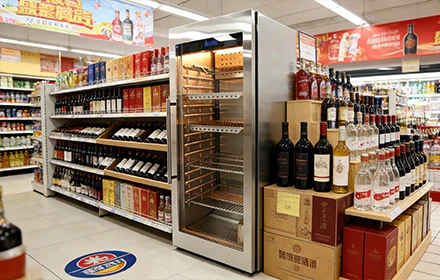
Night curtains, also called night blinds, are a simple but powerful accessory for open chillers and refrigerated display cases. When used correctly, they help reduce cold air loss, lower energy consumption, and keep products at a more stable temperature after business hours.
However, night curtains are not always helpful. Poor operation, damaged curtains, or using them at the wrong time can actually create temperature problems, increase product risk, and reduce the performance of your refrigeration equipment.
For supermarkets, convenience stores, grocery wholesalers, food distributors, and commercial refrigeration buyers, understanding proper night curtain use is essential. This guide explains the best practices for using night curtains, when they save energy, when they may hurt performance, and how to prevent product warming.
What Is a Night Curtain?
A night curtain is a pull-down blind installed on an open refrigerated display case, such as an open chiller, multideck display fridge, or open dairy cabinet.
Its main purpose is to reduce the exchange of warm room air and cold refrigerated air when the store is closed or when customer access is not needed.
Common applications include:
- Supermarket open chillers
- Dairy display refrigerators
- Beverage display cases
- Fresh produce chillers
- Meat and deli refrigerated displays
- Convenience store open coolers
- Wholesale food display refrigerators
When the curtain is down, it creates a barrier that helps the cabinet maintain temperature more efficiently.
Why Night Curtains Can Save Energy
Open chillers consume more energy than closed-door refrigerated cabinets because they constantly lose cold air to the surrounding environment. The refrigeration system must work harder to replace that lost cooling.
Using a night curtain after hours can help reduce this load.
Main energy-saving benefits include:
- Less cold air escaping from the cabinet
- Reduced compressor running time
- More stable internal temperature
- Lower refrigeration system workload
- Better overnight product protection
- Reduced impact from store lighting and ambient heat
For businesses with multiple open chillers, proper night curtain use can contribute to meaningful operating cost savings over time.
This is especially important for wholesale and retail businesses where refrigeration equipment runs 24 hours a day.
When Night Curtains Work Best
Night curtains work best when the store is closed, customer access is not required, and the chiller is already operating at the correct temperature.
The best time to use a night curtain is usually after business hours, once the cabinet is fully stocked, organized, and stable.
Ideal conditions for using a night curtain:
- The open chiller is at the correct operating temperature
- Products are already properly chilled
- Air vents are not blocked
- The curtain is clean and undamaged
- Staff will not repeatedly open and close the curtain
- The cabinet is not overloaded
- Store ambient temperature is controlled
When these conditions are met, the night curtain helps the cabinet maintain temperature with less energy.
When Night Curtains Can Hurt Performance
Although night curtains are useful, they can cause problems if used incorrectly.
A common mistake is pulling the curtain down when the cabinet is overloaded, products are warm, or airflow is blocked. In that situation, the curtain may trap uneven temperatures inside the cabinet instead of improving performance.
Night curtains may hurt performance when:
- Warm products have just been loaded
- The cabinet is overfilled
- Air return or discharge vents are blocked
- The curtain is damaged or does not close properly
- Staff pull the curtain down too early
- The cabinet already has poor airflow
- Products are stacked too close to the curtain
- The refrigeration system is not working correctly
In these cases, using the curtain may hide an existing problem rather than solve it.
How Long Should You Keep the Night Curtain Down?
In most cases, the night curtain should stay down during non-business hours and be opened before customers need access to the products.
For example, if a store closes at 10:00 p.m. and opens at 7:00 a.m., the curtain may remain down overnight. Before opening, staff should raise the curtain and check product temperature, airflow, and display condition.
General rule:
Keep the night curtain down only when customer access is not needed and the cabinet can maintain safe, stable temperatures.
Do not use the curtain as a substitute for proper refrigeration performance. If the cabinet cannot hold temperature without the curtain during normal operation, the equipment may need maintenance, adjustment, or replacement.
Best Practices for Using Night Curtains
To get the best performance from night curtains, businesses should create a clear operating procedure for staff.
1. Check Cabinet Temperature Before Closing the Curtain
Before pulling the curtain down, confirm that the open chiller is already within the required temperature range.
If the cabinet is too warm, do not simply close the curtain and assume the problem will correct itself. Investigate the cause first.
Possible causes include blocked airflow, recent product loading, dirty condenser coils, high ambient temperature, or refrigeration failure.
2. Do Not Load Warm Products and Immediately Close the Curtain
One of the biggest mistakes is loading products that are not fully chilled and then pulling the curtain down.
Night curtains help maintain temperature; they are not designed to rapidly cool warm products.
For best results:
- Pre-chill products before placing them in the display case
- Avoid large warm product loads before closing
- Allow the cabinet time to stabilize after restocking
- Check product temperature before closing the curtain
This is especially important for dairy, meat, seafood, ready-to-eat foods, and other temperature-sensitive products.
3. Keep Airflow Open
Open chillers depend on proper air circulation. If products block the discharge or return air vents, the cabinet cannot cool evenly.
Before closing the night curtain, staff should make sure that products are not stacked above the load line and that vents are clear.
Blocked airflow can cause:
- Warm spots
- Product temperature variation
- Frost buildup
- Compressor overwork
- Poor overnight cooling performance
A night curtain cannot fix poor airflow.
4. Pull the Curtain Down Fully
A partially closed night curtain is less effective. Gaps allow warm air to enter and cold air to escape.
Staff should pull the curtain down smoothly and completely. The bottom edge should sit correctly in place without leaving large openings.
If the curtain does not close properly, check for damage, dirt, bent tracks, or product interference.
5. Do Not Let Products Touch the Curtain
Products should not press against the night curtain. Contact between products and the curtain can block airflow and cause uneven temperatures.
It can also damage packaging or prevent the curtain from closing fully.
Leave enough space between the product display and the curtain to allow proper air movement.
6. Open the Curtain Before Business Hours
Do not wait until customers arrive to open the curtain. Staff should raise the night curtain early enough to inspect the cabinet and confirm that products are still properly displayed and at the correct temperature.
Before opening to customers, check:
- Cabinet temperature
- Product condition
- Airflow
- Frost or condensation
- Product arrangement
- Curtain condition
This helps prevent service issues and product safety risks.
7. Clean and Inspect the Curtain Regularly
Night curtains can collect dust, moisture, food residue, and debris. A dirty or damaged curtain may not roll smoothly or seal correctly.
Regular maintenance should include:
- Cleaning the curtain surface
- Checking the roller mechanism
- Inspecting side tracks
- Looking for tears or holes
- Confirming smooth movement
- Replacing damaged curtains when needed
A damaged night curtain may reduce energy savings and create operational problems.
Night Curtain Use for Open Chillers After Hours
Open chillers after hours are one of the most common use cases for night curtains. Since no customers need access to products overnight, closing the curtain can help reduce energy waste.
However, staff must follow the correct process.
Recommended after-hours procedure:
- Finish restocking early enough for the cabinet to stabilize.
- Remove products blocking vents or exceeding the load line.
- Check and record cabinet temperature.
- Confirm products are properly chilled.
- Pull the night curtain down completely.
- Inspect for gaps, blocked airflow, or product contact.
- Open the curtain before business hours.
- Check temperature again in the morning.
This simple procedure can reduce misuse and help prevent overnight temperature swings.
Common Night Curtain Mistakes to Avoid
Many businesses install night curtains but do not train staff on proper use. This often leads to inconsistent performance.
Avoid these common mistakes:
- Leaving the night curtain unused
- Pulling it down while the cabinet is too warm
- Closing it immediately after loading warm stock
- Overfilling the open chiller
- Blocking air vents
- Letting products touch the curtain
- Leaving the curtain partially open
- Ignoring damaged or dirty curtains
- Using the curtain during busy shopping hours
- Assuming the curtain can replace proper maintenance
A night curtain is a useful energy-saving tool, but only when paired with correct refrigeration practices.
How to Prevent Product Warming
Preventing product warming is the most important goal of any refrigeration operation. Energy savings should never come at the expense of food quality or product safety.
To reduce the risk of product warming:
- Use properly sized refrigeration equipment
- Keep products below the cabinet load line
- Pre-chill products before display
- Maintain clear airflow paths
- Train staff on curtain operation
- Monitor cabinet temperature regularly
- Service refrigeration equipment on schedule
- Avoid frequent after-hours curtain opening
- Repair or replace damaged curtains
Temperature monitoring is especially important for businesses selling perishable foods in bulk or operating multiple refrigerated display units.
Should Every Open Chiller Have a Night Curtain?
For many commercial open chillers, a night curtain is a smart investment. It can help reduce operating costs and improve overnight temperature stability.
However, the equipment design, store environment, product type, and staff operation all matter.
A night curtain is most valuable when:
- The chiller operates overnight
- The store has long closed hours
- Energy costs are high
- Products are temperature-sensitive
- The cabinet is in a warm or high-traffic area
- Staff can follow proper operating procedures
For wholesale buyers, choosing open chillers with durable, easy-to-use night curtains can improve both energy efficiency and daily operation.
Choosing Open Chillers with Quality Night Curtains
When purchasing open chillers for supermarkets, convenience stores, or wholesale refrigeration projects, pay attention to the night curtain design.
A good night curtain should be:
- Easy to pull down and retract
- Durable for daily use
- Properly sized for the cabinet
- Smooth and stable during operation
- Easy to clean
- Resistant to moisture and wear
- Designed to reduce air leakage
For wholesale buyers, product durability is especially important because equipment may be used in high-volume commercial environments.
A low-quality curtain may fail quickly, reduce energy savings, and create extra maintenance costs.
Final Thoughts
Night curtains can save energy, reduce refrigeration load, and help open chillers maintain stable temperatures after hours. But they must be used correctly.
The key point is simple: night curtains help maintain cold conditions, but they do not fix poor airflow, warm product loading, overfilled displays, or failing refrigeration systems.
For best results, businesses should train staff, follow a clear closing procedure, monitor temperatures, and choose commercial open chillers with reliable night curtain systems.
When used properly, night curtains are a practical and cost-effective tool for improving refrigeration efficiency and protecting products overnight.
FAQ
1. Do night curtains really save energy?
Yes. Night curtains can help reduce energy use by limiting cold air loss from open chillers during non-business hours. The actual savings depend on cabinet design, store temperature, operating hours, and staff usage.
2. When should I pull down the night curtain?
The night curtain should usually be pulled down after business hours when customers no longer need access to the products. Before closing it, make sure the chiller is at the correct temperature and airflow is not blocked.
3. Can I close the night curtain right after restocking?
It is better to avoid closing the curtain immediately after loading warm products. Products should be properly pre-chilled, and the cabinet should have time to stabilize before the curtain is pulled down.
4. How long can a night curtain stay down?
A night curtain can usually stay down throughout the closed period, such as overnight. It should be opened before business hours so staff can check temperature, product condition, and display quality.
5. Can a night curtain prevent product warming?
A night curtain can help reduce product warming by limiting warm air entry, but it cannot replace proper refrigeration. Products may still warm if the cabinet is overloaded, vents are blocked, or the refrigeration system is not working correctly.
6. Should products touch the night curtain?
No. Products should not press against the curtain. This can block airflow, prevent the curtain from closing fully, and create uneven temperatures inside the cabinet.
7. Why is my open chiller still warm with the night curtain down?
Possible reasons include blocked air vents, overloading, warm product loading, dirty condenser coils, high room temperature, a damaged curtain, or refrigeration system problems. The cabinet should be inspected and serviced if temperature problems continue.
8. Are night curtains suitable for all open chillers?
Many open chillers benefit from night curtains, but suitability depends on the cabinet design, product type, store environment, and operating procedure. For commercial and wholesale applications, it is best to choose open chillers designed with reliable night curtain systems.