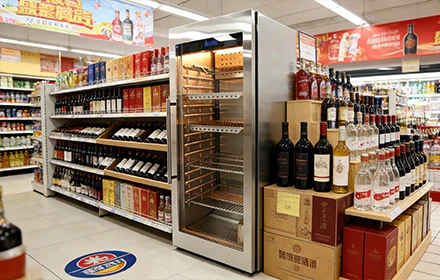
Choosing the right multideck open chiller is critical for supermarket efficiency, product visibility, and long-term operating cost. Yet many buyers focus only on price and overlook key performance factors—leading to energy waste, product spoilage, and poor merchandising results.
This checklist provides a practical, B2B-focused framework to help you select the right open display refrigerator for dairy, beverages, and fresh retail environments.
1. Air Curtain System: The Core of Cooling Performance
The air curtain system is the most important component of any open display refrigerator. It creates a controlled airflow barrier that keeps cold air inside while minimizing warm air infiltration.
What to Check:
✔ Airflow Stability
- Is the airflow uniform from top to bottom?
- Does it maintain temperature across all shelves?
✔ Fan Quality & Configuration
- EC fans (energy-efficient, stable airflow) are preferred
- Multiple fan layers improve air distribution
✔ Air Curtain Depth & Angle
- Poor design leads to “warm zones” in the middle shelves
- Ask for airflow test data or CFD simulation
✔ Return Air System
- Efficient air recirculation reduces compressor load
- Check if bottom air intake is unobstructed
Why It Matters:
A weak air curtain leads to:
- Temperature fluctuations
- Increased product shrink (especially dairy)
- Higher energy consumption
2. Night Curtain Savings: Hidden ROI Lever
Many buyers underestimate the impact of night curtain savings, but this is one of the fastest ways to reduce operational costs.
What to Check:
✔ Type of Night Curtain
- Manual vs. automatic
- Soft curtain vs. rigid cover
✔ Sealing Performance
- Does it fully cover the open front?
- Any gaps will reduce effectiveness
✔ Ease of Use
- Staff-friendly operation is critical
- Complicated systems often go unused
Energy Impact:
- Typical savings: 10%–22% energy reduction
- Payback period: 2–4 years
Why It Matters:
Without a night curtain:
- Cold air escapes overnight
- Compressor runs continuously
- Electricity costs increase significantly
3. Shelf Depth & Layout: Sales-Driven Design
Shelf design directly impacts product display capacity and sales performance, especially for dairy and beverage applications.
What to Check:
✔ Shelf Depth Options
- Standard: 350–450 mm
- Deep shelves: higher capacity but may reduce airflow
✔ Adjustability
- Multi-angle shelves improve product visibility
- Flexible spacing for different SKUs
✔ Load Capacity
- Heavy-duty shelves for beverages
- Reinforced brackets for bulk retail
✔ Lighting Integration
- LED lighting enhances product appeal
- Ensure no heat impact on products
Application Tips:
For Dairy Displays:
- Moderate shelf depth (avoid airflow blockage)
- Stable temperature across all levels
For Beverage Displays:
- Deeper shelves for higher SKU density
- Strong load-bearing structure
4. Temperature Consistency & Defrost System
Temperature stability is essential for food safety and compliance.
What to Check:
✔ Temperature Range
- Dairy: 2°C – 5°C
- Beverages: 3°C – 8°C
✔ Defrost Method
- Off-cycle defrost (energy-saving)
- Electric defrost (for humid environments)
✔ Sensors & Control System
- Digital controllers with precise calibration
- Real-time monitoring preferred
5. Energy Efficiency & Operating Cost
Energy consumption is a major long-term cost factor.
What to Check:
✔ Compressor Type
- Inverter compressors for variable load
- Stable performance under peak hours
✔ Fan Motors
- EC fans reduce energy usage significantly
✔ Insulation Quality
- Better insulation = less cooling loss
✔ Energy Certification
- Check for regional compliance (UL, DOE, etc.)
6. Store Layout Compatibility
Improper placement can ruin even the best equipment performance.
What to Check:
✔ Avoid:
- Near entrances (hot air infiltration)
- Direct HVAC airflow
- Sunlight exposure
✔ Ideal Placement:
- Along interior walls
- Stable ambient temperature zones
7. Supplier Capability (Critical for B2B Buyers)
For bulk projects, choosing the right supplier is as important as the product itself.
What to Check:
✔ Customization Capability
- Size, color, branding (OEM/ODM)
✔ Project Experience
- Supermarkets, convenience chains, wholesalers
✔ After-Sales Support
- Spare parts availability
- Technical support response time
✔ Lead Time & Production Capacity
- Critical for large-scale rollout
8. Final Buyer Checklist (Quick Summary)
Before purchasing a multideck open chiller, confirm:
- ✔ Air curtain system is stable and tested
- ✔ Night curtain is included and easy to use
- ✔ Shelf depth matches your product category
- ✔ Temperature control is precise and consistent
- ✔ Energy-saving components (EC fans, inverter compressor)
- ✔ Layout fits your store environment
- ✔ Supplier supports bulk orders and customization
Conclusion: Choose Performance, Not Just Price
A multideck open chiller is not just a display unit—it directly impacts your store’s profitability, energy costs, and product quality.
By following this checklist, you can:
- Avoid common procurement mistakes
- Improve merchandising efficiency
- Reduce long-term operating costs