When planning a retail refrigeration layout, the choice between an open-air merchandiser (air curtain / multideck chiller) and a glass-door merchandiser directly affects sales velocity, operating cost, and overall ROI.
This guide breaks down the decision using a B2B operator mindset—focusing on:
- Impulse purchase efficiency
- Energy cost
- Shrinkage & temperature stability
- Real retail scenarios
What Is an Open-Air Merchandiser?
An open-air merchandiser (also called a multideck chiller or air curtain merchandiser) uses a continuous cold air curtain instead of physical doors.
Key Characteristics
- No doors → instant access
- Typically operates at 2–8°C
- Ideal for grab-and-go categories
- Requires stable ambient conditions
Best Use Cases
- Convenience stores
- Supermarket beverage zones
- Ready-to-eat food sections
- High-traffic retail aisles
What Is a Glass-Door Merchandiser?
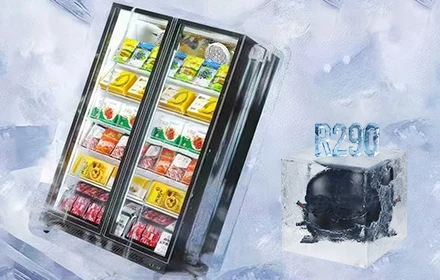
A glass-door merchandiser uses insulated doors (swing or sliding) to maintain temperature.
Key Characteristics
- Sealed environment → better temperature control
- Lower energy consumption
- Reduced product shrinkage
- Suitable for both chilled and frozen products
Best Use Cases
- Beverage coolers (multi-door lineup)
- Frozen food sections
- Medium/low traffic stores
- Energy-sensitive operations
Core Comparison: Sales vs Energy
1. Impulse Purchase Efficiency
| Factor | Open-Air Merchandiser | Glass-Door Merchandiser |
|---|---|---|
| Access friction | ⭐ None | ❌ Door required |
| Grab speed | ⭐⭐⭐ Very fast | ⭐ Medium |
| Visual exposure | ⭐⭐⭐ Full | ⭐⭐ Slightly reduced |
| Conversion uplift | +15% to +40% | Baseline |
Conclusion:
If your KPI is “sell more per square meter”, open-air wins.
2. Energy Consumption (运营成本核心)
| Factor | Open-Air | Glass-Door |
|---|---|---|
| Energy usage | ❌ High | ⭐ Low |
| Night curtain needed | Yes | No |
| Ambient sensitivity | High | Low |
| Annual cost | +20% to +60% | Baseline |
Conclusion:
If your KPI is “reduce operating cost”, glass-door wins.
3. Temperature Stability & Shrinkage
| Factor | Open-Air | Glass-Door |
|---|---|---|
| Temperature fluctuation | High | Low |
| Product shelf life | Shorter | Longer |
| Shrinkage risk | Higher | Lower |
Conclusion:
For fresh food, dairy, or frozen products, glass-door is safer.
4. Maintenance & Operations
| Factor | Open-Air | Glass-Door |
|---|---|---|
| Cleaning frequency | High | Medium |
| Maintenance complexity | Medium | Medium |
| Door repair | N/A | Required |
Decision Matrix
Use this matrix to quickly decide:
| Scenario | Recommended Solution |
|---|---|
| High-traffic convenience store | Open-air merchandiser |
| Supermarket beverage wall (high turnover) | Hybrid (open + glass) |
| Frozen food / ice cream | Glass-door freezer |
| Energy-sensitive chain stores | Glass-door |
| Grab-and-go meals | Open-air |
| Small store with AC limitations | Glass-door |
Hybrid Strategy
Top retailers rarely choose just one—they use a zoning strategy:
Example Layout
- Entrance / Hot zone: Open-air (impulse boost)
- Main aisle: Glass-door (energy control)
- End caps: Open-air (promotion)
This delivers:
- +Sales uplift
- Controlled energy cost
- Balanced ROI
ROI Perspective
Open-Air Merchandiser
- Higher revenue per SKU
- Faster inventory turnover
- Higher electricity cost
Glass-Door Merchandiser
- Lower operating cost
- Better product protection
- Slightly lower impulse sales
Key Insight:
Open-air = Revenue driver
Glass-door = Cost controller
Final Verdict
There is no absolute winner—only fit-for-purpose decisions:
- Choose open-air merchandisers if your priority is sales growth and customer convenience
- Choose glass-door merchandisers if your priority is energy efficiency and product stability
- Choose hybrid layouts if you want maximum ROI
FAQ
1. Which is better for grab-and-go?
Open-air merchandisers perform significantly better due to zero access barrier.
2. Do open-air cases consume more electricity?
Yes, typically 20–60% higher than glass-door units.
3. Can I mix both in one store?
Yes—and this is the industry best practice.
4. Are open-air merchandisers suitable for hot climates?
Only with strong HVAC support; otherwise efficiency drops significantly.