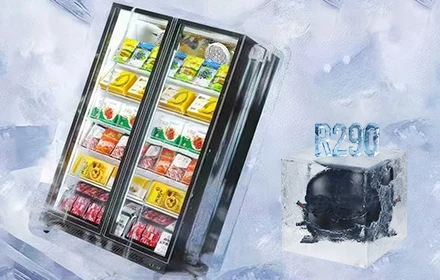
Retail refrigeration is no longer just about keeping products cold. For supermarkets, convenience stores, beverage brands, foodservice chains, and retail equipment distributors, refrigeration choices now affect compliance, operating costs, brand reputation, and long-term sustainability strategy.
As refrigerant regulations become stricter worldwide, many buyers are moving away from traditional high-GWP refrigerants and choosing R290 merchandising refrigerators as a future-ready display solution. R290, also known as propane refrigerant, is a natural refrigerant with very low global warming potential, making it a strong choice for retailers that want to align purchasing decisions with environmental responsibility.
For wholesale buyers, this shift creates a clear opportunity: offering low-GWP retail refrigeration equipment is not only a compliance-driven decision, but also a practical way to support customers’ ESG goals and strengthen their green brand image.
Why Refrigerant Choice Matters in Retail Refrigeration
Retail display equipment works every day, often for long hours, in highly visible customer-facing environments. From glass door merchandisers to open display coolers, the refrigerant inside the system directly affects the environmental profile of the equipment.
Traditional HFC refrigerants have been widely used in commercial refrigeration, but many of them have high global warming potential. Governments and regulatory bodies are now reducing the use of fluorinated greenhouse gases through phased restrictions. In the European Union, Regulation (EU) 2024/573 strengthens the control of fluorinated greenhouse gases and repeals the previous F-gas Regulation No. 517/2014.
For retailers, this means refrigeration purchases must be evaluated not only by price and capacity, but also by long-term regulatory compatibility.
What Is an R290 Merchandising Refrigerator?
An R290 merchandising refrigerator is a commercial display refrigerator that uses R290 propane as the refrigerant. It is commonly used for beverage display, dairy products, packaged food, fresh produce, convenience retail, and supermarket promotions.
R290 is a natural hydrocarbon refrigerant. Its key advantage is its extremely low global warming potential compared with many traditional synthetic refrigerants. This makes it suitable for businesses looking for low GWP retail refrigeration solutions.
Common R290 display equipment includes:
- Glass door merchandisers
- Beverage display refrigerators
- Supermarket display coolers
- Convenience store chillers
- Plug-in display cabinets
- Retail freezer merchandisers
- Countertop and upright commercial refrigerators
For wholesale buyers, R290 models are especially attractive because they match growing demand from retailers, distributors, and brand owners seeking sustainable display equipment.
How Refrigerant Regulations Are Driving R290 Adoption
Regulatory pressure is one of the strongest reasons retailers are upgrading to R290 display equipment.
The EU’s updated F-gas Regulation places stronger limits on fluorinated greenhouse gases and introduces phased restrictions for equipment using higher-GWP refrigerants. For commercial refrigeration, industry guidance highlights that new self-contained refrigeration equipment is moving toward strict GWP thresholds, including limits around GWP 150 for certain categories.
This matters for purchasing teams because refrigeration equipment is a long-term investment. A display refrigerator bought today may remain in service for years. Choosing outdated refrigerant technology can increase future compliance risks, service challenges, and replacement pressure.
By contrast, R290 refrigeration equipment helps buyers prepare for changing regulations because it uses a natural low-GWP refrigerant rather than a high-GWP HFC.
Turning Compliance Into a Purchasing Advantage
For many retail businesses, compliance is often seen as a cost. However, low-GWP refrigeration can turn compliance into a strategic purchasing advantage.
When retailers choose R290 display equipment, they can communicate several clear benefits to internal stakeholders and end customers:
First, R290 supports future-proof refrigeration purchases. Buyers reduce the risk of investing in equipment that may become less attractive as refrigerant rules tighten.
Second, R290 supports ESG reporting and sustainability positioning. Retailers can show that their equipment choices align with climate-conscious operations.
Third, R290 display refrigerators can help brands strengthen their image at the store level. Because merchandising refrigerators are visible to shoppers, sustainable equipment can support a cleaner, more responsible brand message.
For wholesalers, this creates a stronger sales argument. Instead of selling only by price, capacity, or appearance, distributors can position R290 refrigerators as a smart investment in compliance, sustainability, and retail brand value.
Why R290 Is a Strong Fit for Retail Display Equipment
R290 is especially suitable for self-contained commercial refrigeration equipment. Many plug-in merchandisers, beverage coolers, and retail display cases are designed as independent systems, which makes them practical applications for hydrocarbon refrigerants.
In markets such as the United States, updated safety standards and regulatory acceptance have also supported wider use of R290 in commercial refrigeration. For example, UL 60335-2-89 and related EPA SNAP updates have allowed higher R290 charge limits for certain self-contained commercial refrigeration equipment, expanding the potential use of R290 in larger stand-alone display cases.
This development is important because it shows that R290 is not only an environmental trend. It is becoming a mainstream technical direction for commercial display refrigeration.
R290 Safety Compliance: What Buyers Should Know
Because R290 is a hydrocarbon refrigerant, it is classified as flammable. This does not mean it is unsuitable for retail use. It means the equipment must be properly designed, manufactured, tested, labeled, installed, and serviced according to applicable safety standards.
Wholesale buyers should pay attention to:
- Certified components designed for R290 systems
- Proper refrigerant charge limits
- Clear product labeling
- Reliable leak prevention design
- Compliance with applicable market standards
- User manuals and service instructions
- Trained maintenance and after-sales support
A qualified R290 merchandising refrigerator supplier should be able to provide documentation, safety guidance, and model specifications that support buyer confidence.
For retailers, the key is not simply choosing R290. The key is choosing R290 safety compliant display equipment from a responsible manufacturer or wholesale supplier.
ESG and Brand Value: Why Retailers Care
Sustainability is now part of how consumers evaluate brands. Retailers are expected to reduce environmental impact across packaging, energy use, logistics, and store operations. Refrigeration is a visible and important part of that story.
Choosing low-GWP refrigeration supports ESG goals in several ways:
It reduces reliance on high-GWP refrigerants.
It supports climate-focused procurement policies.
It helps retailers prepare for stricter environmental standards.
It gives brands a stronger sustainability message at the point of sale.
It helps chain stores standardize greener equipment across multiple locations.
For beverage brands, food brands, and retail chains, display refrigerators are not only functional equipment. They are also part of the customer experience. A modern R290 display refrigerator can support product visibility while reinforcing a brand’s commitment to responsible retail operations.
Why Wholesale Buyers Should Upgrade Their Product Range
For wholesalers and distributors, demand for future-proof refrigeration is growing. Retailers do not want to buy equipment that may create compliance problems later. They want display refrigerators that are efficient, market-ready, and aligned with sustainability expectations.
Adding R290 merchandising refrigerators to a wholesale product portfolio can help distributors serve:
- Supermarkets
- Convenience store chains
- Beverage distributors
- Foodservice operators
- Retail equipment resellers
- Hospitality suppliers
- Fresh food retailers
- Brand promotion programs
Wholesale buyers can also use R290 as a clear product differentiation point. While basic refrigeration equipment competes mainly on price, R290 display equipment allows suppliers to compete on compliance readiness, sustainability value, and long-term reliability.
How to Choose the Right R290 Merchandising Refrigerator
When purchasing R290 display refrigeration equipment in bulk, buyers should evaluate both product performance and compliance readiness.
Key selection factors include:
Cooling performance: The unit should maintain stable temperatures for beverages, dairy, fresh food, or frozen products.
Display design: Glass doors, LED lighting, adjustable shelves, and branding options can improve product visibility.
Energy efficiency: Efficient compressors, insulation, and airflow design can reduce operating costs.
Regulatory alignment: The equipment should meet the safety and refrigerant requirements of the target market.
After-sales support: Spare parts, documentation, and service guidance are essential for long-term wholesale cooperation.
Customization options: Retailers may need different sizes, colors, logos, shelves, voltage options, or plug types.
For wholesale projects, the best supplier is not only a manufacturer of refrigerators. It is a partner that understands retail display, export compliance, and long-term product support.
Future-Proof Refrigeration Purchase: A Smarter Long-Term Decision
A future-proof refrigeration purchase means choosing equipment that remains practical, compliant, and valuable as regulations and market expectations change.
R290 merchandising refrigerators offer a strong balance of environmental performance, commercial practicality, and retail appeal. For businesses preparing for stricter refrigerant regulations, R290 provides a clear path toward low-GWP refrigeration.
For wholesalers, this is the right time to upgrade product lines and help retail customers make better purchasing decisions. By offering R290 display equipment, distributors can meet the growing demand for sustainable refrigeration while supporting retailers’ ESG and brand goals.
Conclusion
The shift toward R290 display equipment is more than a technical change. It reflects a broader transformation in retail refrigeration purchasing.
Retailers now need equipment that supports compliance, sustainability, energy-conscious operations, and brand reputation. R290 merchandising refrigerators meet these needs by offering a low-GWP alternative for modern retail display applications.
For wholesale buyers, R290 is a strong selling point. It helps transform refrigerant compliance and ESG pressure into a clear purchasing reason: choose refrigeration equipment that is ready for the future.
FAQ
1. What is an R290 merchandising refrigerator?
An R290 merchandising refrigerator is a commercial display refrigerator that uses R290 propane refrigerant. It is commonly used in supermarkets, convenience stores, beverage retail, and food display applications.
2. Why is R290 considered a low-GWP refrigerant?
R290 is a natural refrigerant with very low global warming potential compared with many traditional HFC refrigerants. This makes it suitable for retailers looking for low-GWP retail refrigeration equipment.
3. Are R290 display refrigerators suitable for wholesale purchasing?
Yes. R290 display refrigerators are suitable for wholesale buyers, distributors, and retail equipment suppliers because they meet growing demand for sustainable and regulation-ready refrigeration solutions.
4. Is R290 safe for commercial refrigeration?
R290 is flammable, so safety compliance is important. When equipment is properly designed, manufactured, labeled, and serviced according to applicable standards, R290 can be used safely in commercial refrigeration applications.
5. How do refrigerant regulations affect retail refrigeration purchases?
Refrigerant regulations are reducing the use of high-GWP refrigerants. Retailers buying new display refrigerators need to consider whether the equipment will remain compliant and serviceable in the future.
6. Why should retailers choose R290 instead of traditional refrigerants?
Retailers choose R290 because it supports low-GWP compliance, ESG goals, future-proof purchasing, and a stronger sustainability message for customers and stakeholders.
7. What types of retail equipment can use R290?
R290 is commonly used in glass door merchandisers, beverage coolers, supermarket display cases, plug-in refrigerators, upright chillers, and other self-contained commercial refrigeration equipment.
8. What should wholesale buyers check before purchasing R290 refrigerators?
Wholesale buyers should check safety certification, refrigerant charge limits, cooling performance, energy efficiency, market compliance, product labeling, documentation, and after-sales support.